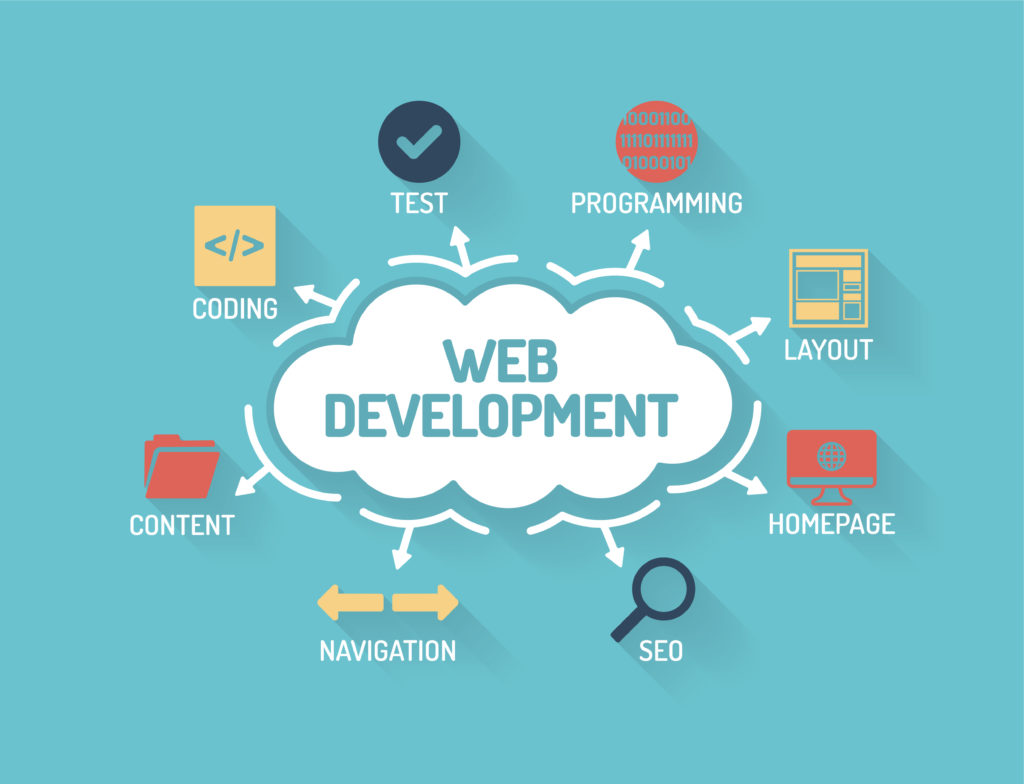
Web development is a constantly expanding field, thanks to the introduction of new technologies, such as applications for smartphones and tablets. For this reason, the demand for staff with the ability to create applications and programs is very high.Becoming a web programmer is a good strategy for people who are already skilled in using technology, but it is a path that requires work and learning. If you are trying to pursue a career as a web developer, you need to learn a number of skills, including programming languages, graphic editing, and marketing.
Part 1 Understanding what it takes to become a web developer
1 Find out what employers are looking for. Almost all companies that want to hire a web developer want staff with specific qualifications.
Many employers are looking in web design company with the degree of computer science. Undergraduate courses in computer science prepare students by teaching them the skills necessary for web development: programming, web design, database management, networking and mathematics. Instead of a degree, many web developers have professional certifications.
You can get them from various institutes and technology companies. For example, Microsoft offers a web development training course that requires you to take an exam and have two or three years of work experience. Although having a qualification or certification is a desirable requirement, there are many independent developers in the market who have managed to build successful businesses without having achieved them.
2 Learn what skills you need to become a web developer. The least you need to do is develop a simple website.
You need to know how the web works and how to program it. A good web developer should know many different programming languages as well as know how to choose the right one. New programming languages and interfaces appear every day. If you want to progress in this field, you must always be up to date with new trends in technology. You need to know some basic aspects of design: color theory, page composition, font selection, etc. Even if the main task is not to create attractive graphics, you should know how to make a website or application look pleasing to users and at the same time easy to use.
3 Understand that web development is a very demanding career.
You need to have excellent interpersonal skills to make a good impression on clients, as well as to be able to manage stress in a constantly changing work environment.
Interpersonal skills are very important in the field of web development. You will have to deal with customers, colleagues and companies every day. It is essential to know how to manage an impatient customer or a person who does not understand the technology. You will be dealing with customers and difficult people who need a lot of help to learn how to use the technology you develop. You will also need time and stress management skills. Being a web developer is very expensive in terms of energy. You will have to work on several projects simultaneously and meet short deadlines.
Part 2 Learning to know programming languages
1 Understand the purpose and function of programming languages and platforms. Without these tools, the web and other applications would not work properly.
Languages and programming platforms are the tools used by developers to create applications, scripts, and other sets of instructions that the computer must execute. There are dozens of different programming languages. Each uses a different platform or program to write scripts, applications, and instructions.
2 Familiarize yourself with HTML. It is one of the most widely used languages for websites.
Almost anyone can learn the basics of HTML in an afternoon, using one of the many tutorials available online. HTML is a language that consists of many short lines of code inserted into a text document. It has its own rules for grammar and syntax, just like normal language. HTML stands for Hyper Markup Language. Hypertexts are the way users navigate the Internet.
When you click on the link, use hypertext that takes you from one page to another. When writing in HTML, you will use a series of tags. They determine the function of the text: in italics, a link to another page, a list of newsletters and so on.
After writing the HTML code to a text file, you will save it as an .html file. You can then open it with a browser such as Google Chrome or Firefox. Browsers can read files and translate code into a graphical interface. The result is the usual websites you see.
To write in HTML, you can simply use a text editor or a powerful editing tool such as the HTML Kit. The other programming languages work in a similar way, but use different syntaxes and tags. You will probably use them if you want to create more complex web pages.
3 Learn to use Java. It is a programming language commonly used by web developers.
The main purpose of Java is to allow web developers to write scripts or application instructions. This language allows programmers to write a program and run it on all platforms. Some popular websites programmed with this language are Netflix, Edmunds and Zappos. Some of the most used tools for writing and programming in Java are JSON and CORE.
4 Develop your skills using NET / C #. This skill is essential if you plan to work on Microsoft operating systems.
This programming language was created for Microsoft platforms. The most popular websites that use this development tool are ExactTarget, Comcast and XBOX. The development tools that help write in NET / C # are Flippy, SQL Helper, Imagehandler and CodeSmith. Other tools that can verify the integrity of your code and help you create applications that work more easily are FxCop, Regulator, NUnit, and NDoc.
5 Consider learning PHP. This is another language especially suitable for web development.
This is the most widely used scripting language. This language allows web developers to write quickly. Moreover, it is more flexible than the others. . Some of the most used tools for PHP are Slim.PHP, Secureimage and Webgrind. Other tools include, but are not limited to Scavenger, PHP DOX, and PHP_Debug. There are many testers, troubleshooters and documentation available for this programming language.
6 Consider developing your C ++ writing skills. This language is mainly used for system programming.
It is an easy to use and very flexible language. The most popular websites developed with C ++ are JPMorgan Chase, DIRECTTV and Sony. There are many tools that help you write in C ++, such as Doxygen, Graphviz and Mscgen. Eclipse is another popular C ++ tool.
7 Learn to program in Python. It is a widely used language by many websites.
Python is a programming language known for its ease of use, which allows developers to quickly create embedded codes and systems. This language has an easy-to-read and easy-to-follow programming syntax. This reduces the maintenance costs of the program. Some of the websites you use every day are based on Python, such as Google and Youtube. Some of the tools you can try working with Python are Komodo Edit IDE, PyCharm IDE and Eclipse with PyDev.
Part 3 Learning the basics of graphic design
1 Understand the basics of graphics on a web page. Almost all web developers do not deal with the graphics of their sites, but it is still important to know the basics of this area.
You need to know how to crop an image, resize it, change the color scheme, and add text. You can use many different graphics and image editing applications. Each of these programs has a specific interface and methods of use. Although most web developers of large corporations do not deal with graphics and application pages, it is still important to present the techniques used in this field. Many web developers deal with the graphics of their products, especially in small companies or if they are self-employed.
2 Download a free graphics program. This will allow you to practice and get used to the simpler editing operations.
You can download programs like GIMP and Inkscape for free on the Internet. You can find many tutorials for these programs on the Internet. These free programs allow you to perform the simplest editing tasks and create basic graphics. With GIMP and Inkscape you can crop and resize images and graphics, add shapes and text, remove red-eye, and change site colors.
3 Practice adding images to a website. Create a simple page on a topic that interests you.
Use your HTML programming skills to place simple images and graphics on your site. Use GIMP or Inkscape to edit images. Check the website to see how changes to the images affect the appearance of the page. You need to practice and experiment with the various options to find the editing methods you prefer. When you are hired by a client, you will need to be able to edit images and graphics according to your needs.
Part 4 Promoting your capacity
1 Design different websites. This way, you can show potential customers your skills.
You should create different types of websites: one that contains images such as drawings or photos and videos, one for a business, and one for your hobby or passion, such as a blog. These types of websites are the ones most frequently requested by web developers. Create a page for an imaginary company, where you should include details about the type of business, products and services it sells, images of potential job opportunities, a page for products and services, and a contact page. Create your personal website, including information about the programming languages you know, rates, and links to the websites you’ve worked on or created. This way your customers can see your work. Create a blog where users can use an interface to add their own content. Work with different programming languages so that your potential customers know your skills.
2 Printing business cards. Distribute them to events.
Make sure your ticket has a link to your personal website or business site to promote your business as an independent web developer. Write the contact information on the ticket. Add links to the websites you’ve worked on so potential customers can see your work.
3 Increase your presence on social networks. Create a page about your business and the type of web development you specialize in.
As a website for your business, this is a very important step in finding work. Try to create a page for your business. Include the types of appointments you’re competent for, rates, and contact information. Create an account and post updates and links to the sites you work on. Make sure you have a Google Plus page or blog where you write about what you’re working on and your progress in web development. Use LinkedIn to communicate with other professionals in your industry.
4 Online and newspaper advertising. When you have the skills to take care of many web development services, you should promote yourself in every way possible.
Post an ad on Craigslist in the Services section of your area. Be sure to include links to the sites you work on and contact information. Try posting an ad in a local newspaper and in industry magazines. These strategies can make you find jobs from local social agencies, non-profit organizations and companies that want to create or improve their website.
Part 5 Finding web developer activity
1 Write and update your resume. Include all experiences, even unpaid ones, in which you worked on designing and programming sites and applications.
It is important to be honest in writing your resume. Don’t include experiences you haven’t had and don’t magnify reality. Avoid abused technical terms and words.
Clearly describe your work experiences without using words such as “synergy” or “creativity”. Include testimonials about your work and links to the code or websites you have developed.
Ask a friend or colleague to check your resume before applying for a job. After you have completed and updated your CV, publish it on the internet.
Try using sites like LinkedIn or Career 2.0. Ask all the contacts you have in the industry to take a look at your resume and let you know if there are opportunities available.
2 Publish some of the code you wrote on the Internet. Online presence is essential for web developers who want to have a successful career.
Post a project you work on in your spare time on collaborative sites like Github. Contribute to open source projects on GitHub and similar websites.
A potential employer who sees a candidate working with others on a web project in their spare time will consider it serious for a job. Post your best code on your internet profiles. Once you have written code or contributed to a project, you can quote it on your CV.
You can also create a blog that talks about the projects you are working on or about trends in web development. Include a link to the page on your resume.
Potential employers often check to see if a candidate keeps up with the latest trends in their field.
3 Research technology companies. Especially if you are contacted by a recruiter or if you have applied for a specific job, it is important to know as much detail as possible about the company.
Find out how long the company has been working. Make sure you know the goals and “mission” of the company. Familiarize yourself with the company’s services and products. A potential employer will not waste time interviewing a person who does not clearly know the business of his company or how it operates.
4 Spend time on technical tests. Many companies will ask you to take a proficiency test before or after an interview.
Take the exam seriously, even if the questions seem trivial. Companies want to know that you can program using a certain programming language or develop a certain type of website. Get as involved as possible in the examination. Make sure your code has no errors and is completed correctly. Use an online site to display the test result. In this way, you will make the potential employer understand that you are able to implement the code you write.
5 Always be prepared for all interviews. Research the atmosphere in society.
Try to guess what dress code to use, office hours and whether you will be asked to travel. Show up for the interview 15 minutes early. This shows that you are on time and that you are able to manage your time well. Prepare some questions for the examiner.
You should ask for information about the work environment, the company culture, the title of the projects you will be working on and so on. Presenting at an interview with employment questions suggests to the potential employer that you have thought carefully about the mission and the interview itself.
Avoid the most common mistakes made in interviews. Don’t ask questions about compensation and don’t speak ill of your previous employers or colleagues. Don’t exaggerate your experiences when asked what projects you’ve worked on.
 Digital Endeavour